


Poll Shows Venezuelans Overwhelmingly Reject Foreign Military Intervention
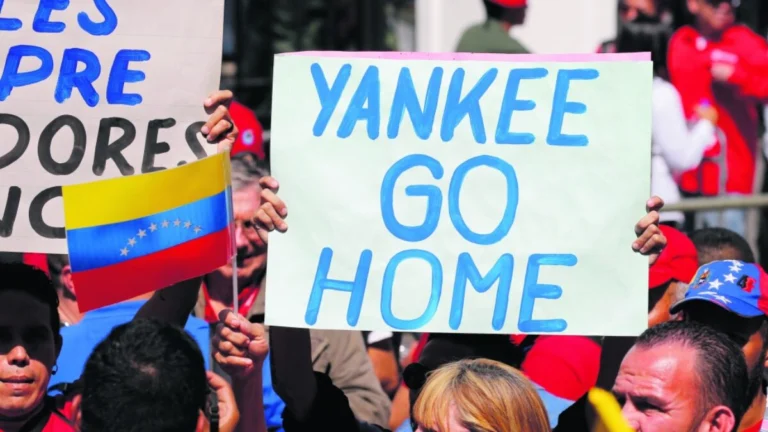
Photo: Labour Outlook
September 11, 2025 Hour: 5:50 pm
🔗 Comparte este artículo
According to Luis Vicente Leon, president of Datanalisis, a clear majority of Venezuelans oppose foreign military intervention, preferring dialogue instead.
“He also stated that the country needs a leadership that inspires confidence in the population and generates governability.”
Related: Venezuelan VP Rodriguez Issues Warning to Governments Seeking to Destabilize LATAM
In a Primera Pagina interview on Globovision, Leon stated that only 3% would support foreign military intervention.
Lessons Drawn from Recent History
Leon linked public sentiment to experiences observed in other countries, warning against the unintended consequences of armed intervention.
Citing Afghanistan, Iraq, and Libya—nations that saw foreign invasions but struggled to secure peace or prosperity afterward—he noted that in each case “a destroyed country remained because there was an internal political vacuum and the only change that happened is that the country entered into civil war.”
Leon stated that national surveys indicate a preference for a democratic approach emphasizing peace, future integration, and political agreements.
Leon argued that durable stability requires broad engagement across the political spectrum.
To “provoke stable changes,” he maintained, it is necessary to negotiate with “the good and the bad” to guarantee integration in the future, because otherwise “stability will not be achieved.”
Implications for Domestic and International Actors
- For Venezuelan political groups: The data underscores the need to prioritize dialogue, electoral routes, and institutional agreements over confrontational or force-based strategies.
- For international stakeholders: The low support for intervention suggests diplomatic backing for negotiations, electoral guarantees, and confidence-building measures may align more closely with public opinion than coercive approaches.
- For civil society: The emphasis on peaceful change highlights the importance of safeguarding channels for participation, expression, and oversight to reinforce any negotiated outcomes.
Venezuelans Looking Ahead
Venezuelans clearly prefer a peaceful, democratic path, rejecting foreign military intervention.
The alignment of domestic and international actors with this mandate will determine the likelihood of long-term stability for Venezuelans.
Negotiation and inclusion will likely remain central to sustainable resolutions as dialogue efforts evolve.
Author: Manuel F. Diaz
Source: teleSUR / Datanalisis / Globovision